selected item
Article
3 min read
• Dec. 16, 2025STEM in the Sahtú: Learning that reflects the land
Imperial supports programs that connect classroom learning to life in the Sahtú Region
- Mackenzie Mountain School in the Sahtú Region of the Northwest Territories uses STEM to solve real-world challenges like watershed health and caribou migration, integrating local knowledge with classroom learning.
- Themes such as “Water” and “Robotics and Coding” guide hands-on lessons that build problem-solving skills, confidence and career readiness for remote communities.
- Imperial supports STEM education with funding for teacher development, technology and student showcases, strengthening community engagement and learning outcomes.
Article
3 min read
• Dec. 16, 2025Matthew Zink, Principal of Mackenzie Mountain School, once waited over 14 months for pig specimens to arrive for a high school science lab. But the lesson had to be reworked when the shipment got stuck in transit.
“We kept checking, hoping they’d arrive on the next barge or flight,” he recalls. “Eventually, we had to rethink the lesson and work with what we had. That’s just part of teaching here, resourcefulness becomes part of the job.”
Transportation constraints affect everything from field trips that require chartered flights to classroom repairs that can take months. When rubber chair leg protectors wore out, Matt didn’t wait for replacements. Instead, he used a 3D printer to design and produce new ones, transforming a maintenance issue into a lesson in innovation.
In Norman Wells, these challenges are part of everyday life. The town sits in the remote Sahtú Region of the Northwest Territories, on the banks of the Mackenzie River. For most of the year, it’s accessible only by air or barge, with a winter ice road open for a few months.
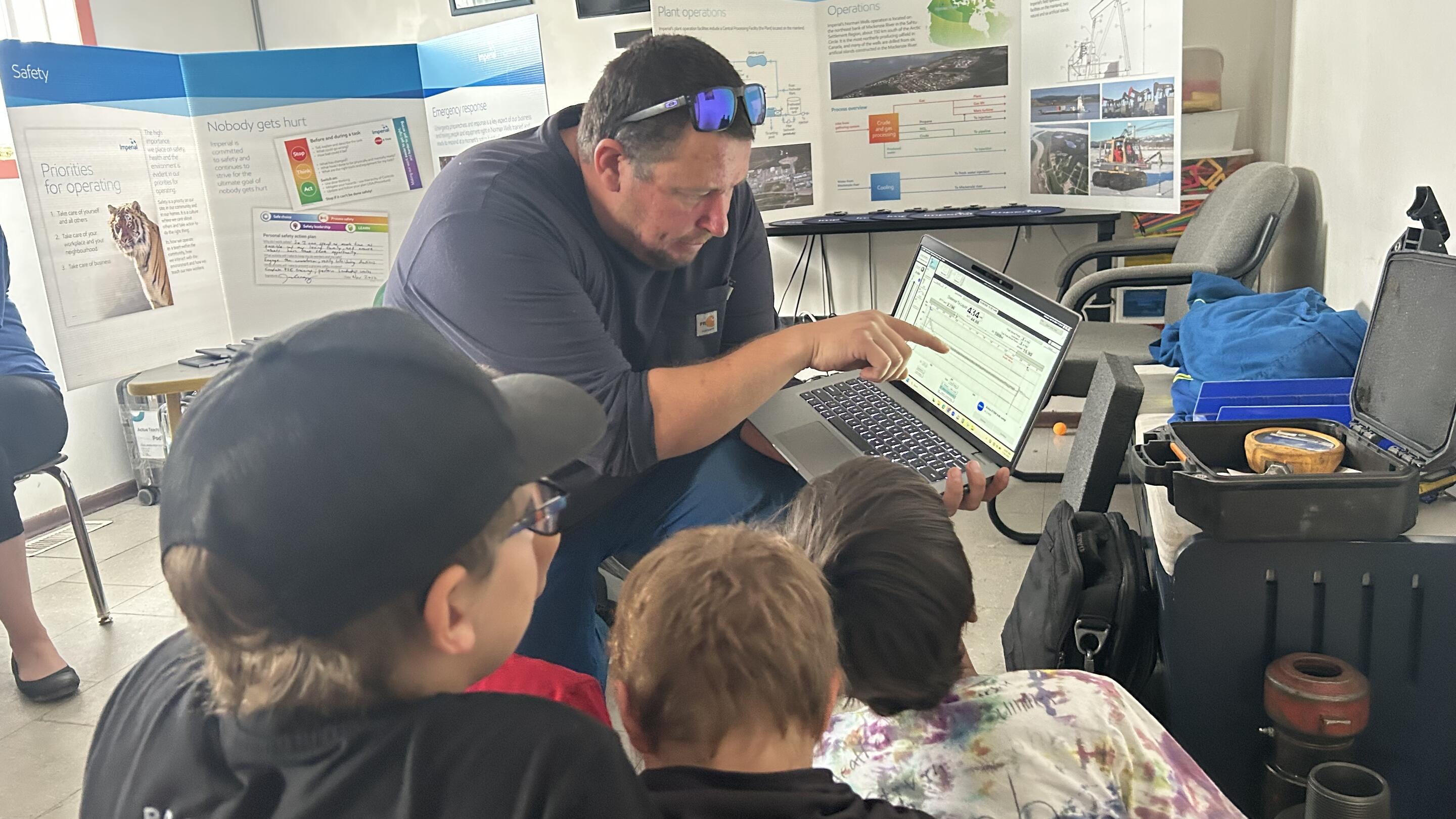
Students at Mackenzie Mountain School use STEM, or Science, Technology, Engineering and Mathematics, to solve real problems in their community. Instead of learning these subjects in isolation, they apply them to everyday challenges.
“STEM is about problem-solving,” says Matt. “Students learn by trial and error, figuring things out. They’re tackling issues like watershed health, caribou migration and local engineering needs.”
Lorraine Kuer, the Superintendent of the Sahtú Divisional Education Council adds, “STEM is more than curriculum, it’s a path towards empowerment. When students see their ideas lead to real solutions, it builds confidence, curiosity and a sense of responsibility.”
For the 2025–26 school year, Mackenzie Mountain School chose “Robotics and Coding” as its theme. Students are learning if/then logic to understand how systems connect, use coding to solve real-world problems and build skills for remote careers.
“Logical thinking helps students make better decisions and see how things fit together,” says Lorraine. “It also supports mental wellness and builds self-confidence.”
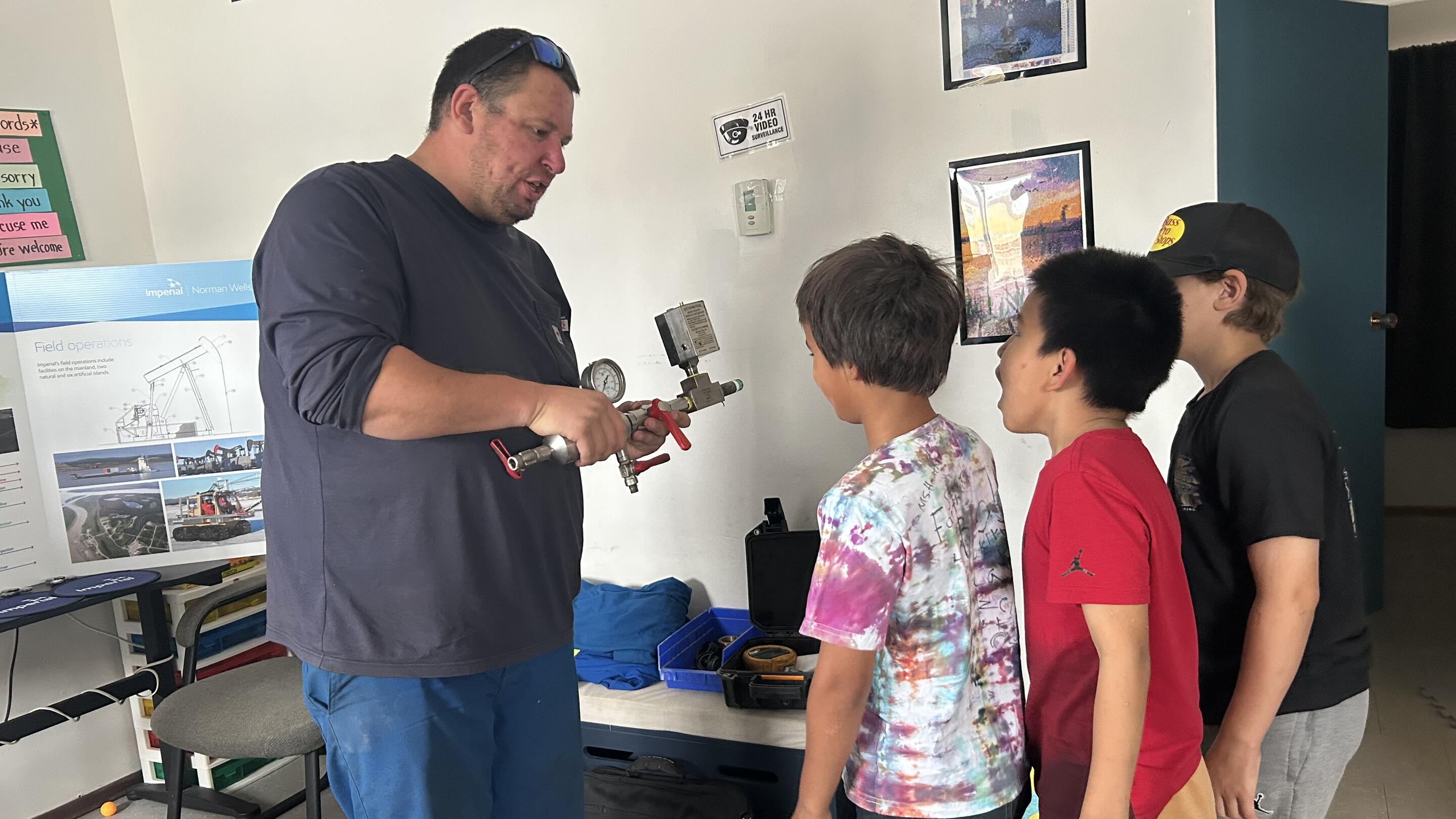
In 2024–25, the school partnered with Indigenization experts to select “Water” as the STEM theme. Lessons were adapted across all grade levels to reflect local knowledge and land-based learning:
- Kindergarten students explored “Is water wet?” through puddle play, outdoor exploration, and hands-on experiments.
- Grade seven and eight students studied river and mountain formation by comparing Dene knowledge with Western science, using the Sahtú Atlas and a book called The Mackenzie River Guide.
- High school students analyzed the impact of the all-season road on Indigenous water rights and regional ecosystems.
Imperial works in partnership with educators to strengthen STEM programming in communities, helping schools access the tools, training, and resources needed to deliver hands-on, locally relevant learning. For schools in the Sahtú Region, Imperial’s $50,000 donation included support for teacher development, classroom technology, and student showcases that highlight innovation and problem-solving.
“Support like this doesn’t just benefit students, it strengthens the whole community,” says Lorraine. “When young people are engaged in learning that connects to their lives and their land, it creates ripple effects. Families get involved, attendance improves, and students start to see themselves as future leaders.”
Stories

Celebrating 100 years of Esso – together
Article
•
2 min read
• Oct. 5, 2026
Norman Wells and Sahtú communities commemorate 106 years together
Article
•
2 min read
• Oct. 5, 2026
Momentum building for potential growth
Blog
•
3 min read
• Sept. 25, 2026
All in for students, STEM and building strong communities
Community
Article
•
3 min read
• Sept. 25, 2026
Actually, curiosity never takes the summer off
Community
Article
•
3 min read
• Sept. 10, 2026
The end of an era at Norman Wells
Article
•
2 min read
• Sept. 1, 2026