
selected item
Article
3 min read
• Sept. 10, 2026Actually, curiosity never takes the summer off
- Actua is Canada’s largest STEM outreach program, representing a national network of universities and colleges that engage youth in STEM learning experiences.
- Imperial has partnered with Actua for more than two decades.
- Every year, Imperial team members participate in Actua summer camps – and leave inspired by the curiosity, confidence and potential of the next generation.
Article
3 min read
• Sept. 10, 2026The first time Imperial community liaison John Tuttauk joined an Actua summer camp, two kids in the community were quiet and hesitant to participate.
A couple of years later, he watched those same kids transform into eager participants — asking questions, testing ideas and wanting to understand why things worked.
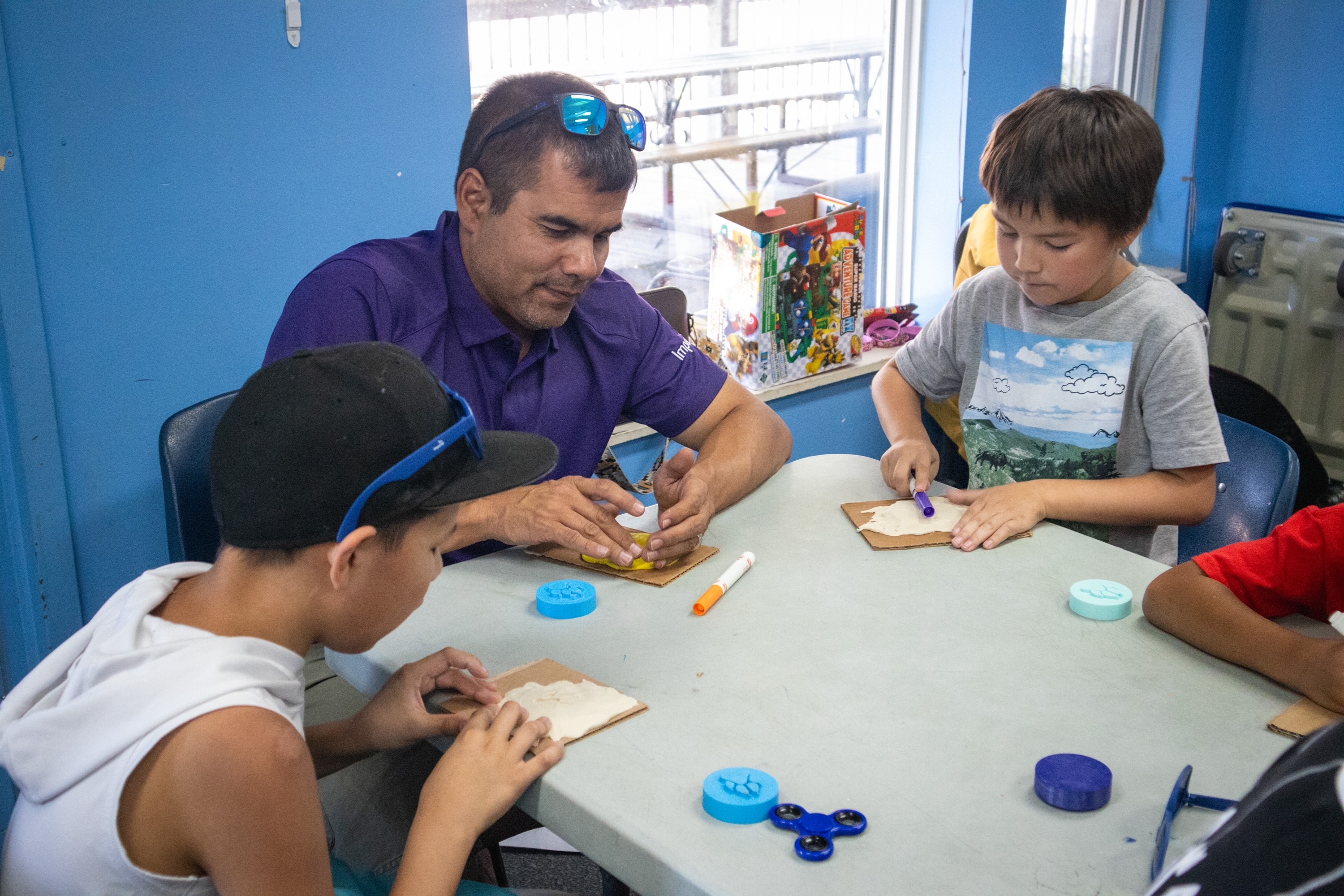
“They were very quiet, very shy and sort of didn’t want to feel comfortable being part of anything at first,” says John. “Now they were 100 per cent engaged. They wanted to know why we’re doing it. How come this makes this happen?”
For John, that change captures what makes the company’s partnership with Actua meaningful.
Actua brings hands-on science, technology, engineering and math (STEM) experiences to young people across Canada, including communities where Imperial operates. Imperial employees volunteer their time to join the camps, sharing their experiences while taking part in activities alongside the participants.
In Anzac, Alberta, John joined students between six and 11 years old as they explored energy through a hands-on activity. In previous years, he has shown campers Imperial’s autonomous truck technology and watched them build robots of their own.
“It’s not just something cool anymore,” he says. “It’s something that they built, something they’ve been part of understanding and learning.”
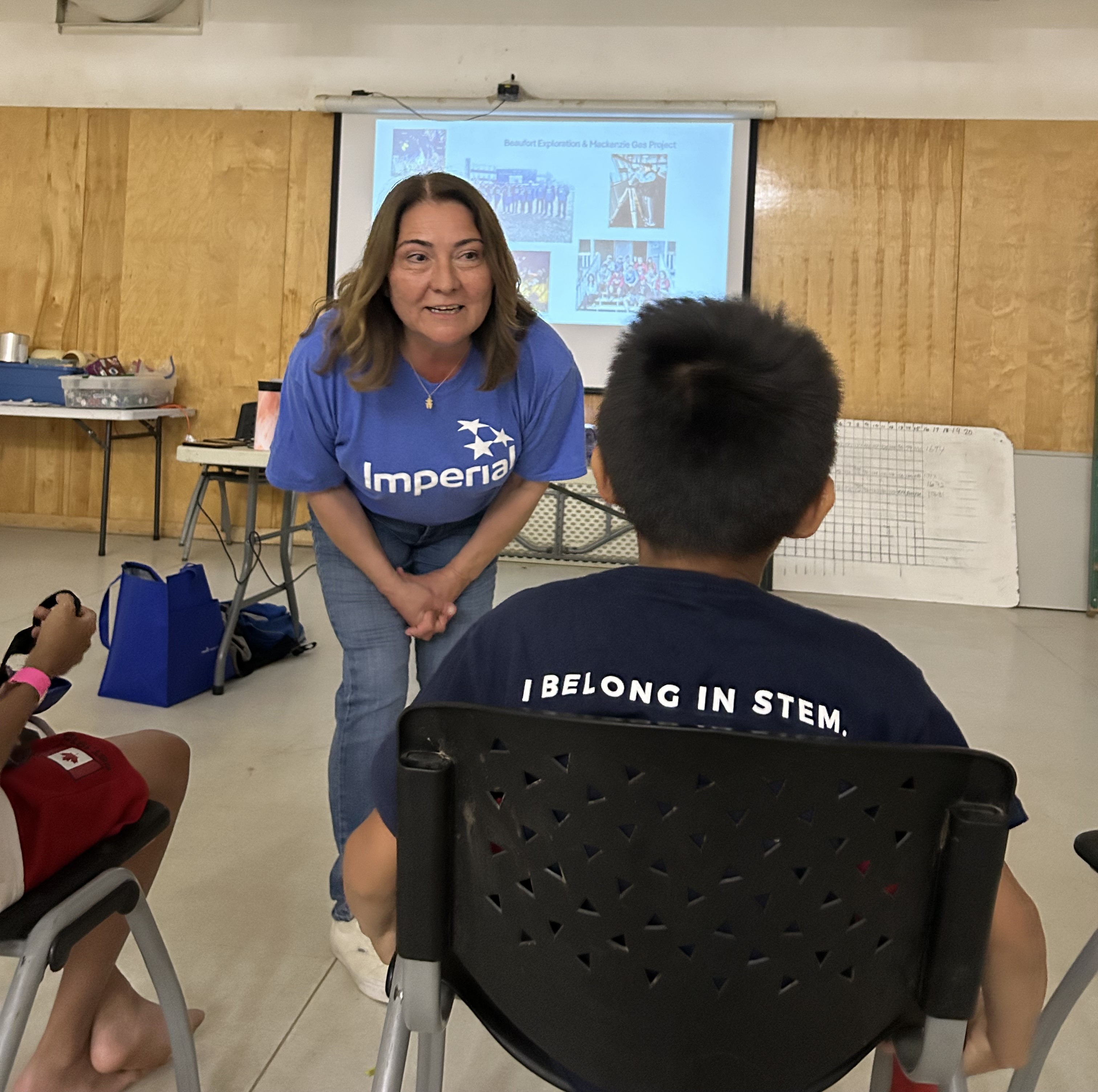
For Wendy Smith, an Imperial socioeconomic advisor who has spent more than two decades working in Indigenous relations, her experience at an Actua camp in Tulita, Northwest Territories was about more than STEM. She wanted the students to see themselves in the possibilities she described.
Her presentation used photographs to tell the story of her career in Indigenous relations, the communities she has worked with, and the projects she has been part of across Canada.
One quiet nine-year-old approached her after the presentation. She began asking Wendy questions — not about Imperial, but about where she was from and about her family.
“I wasn’t just there to talk about Imperial,” Wendy says. “I was a person that she felt comfortable coming to talk to.”
That connection is part of what Wendy believes makes a summer camp different from a traditional classroom.
“The whole environment of being in a summer camp just makes the atmosphere more enjoyable,” she says. “It’s more about the activity while you’re still learning.”
Both employees say the camps can open young minds to possibilities they may not have considered — including futures in STEM and careers in industry.
“If the kids are interested at a young age of 10, 11 years old, they’re probably going to keep that interest,” John says.
Sometimes, the most powerful lesson isn’t about what a child can build.
It’s about helping them imagine what they might one day become.
Stories

Celebrating 100 years of Esso – together
2 min read
• Oct. 5, 2026
Norman Wells and Sahtú communities commemorate 106 years together
2 min read
• Oct. 5, 2026
Momentum building for potential growth
3 min read
• Sept. 25, 2026
All in for students, STEM and building strong communities
Community
3 min read
• Sept. 25, 2026
The end of an era at Norman Wells
2 min read
• Sept. 1, 2026
One billion barrels and counting: Kearl marks a major milestone
2 min read
• Aug. 27, 2026