selected item
Article
Approach to Indigenous and Northern workforce inclusion and training
Article
Training and skill development
Imperial and our contractors will continue to be part of this community for decades to come. This means remaining committed to investing in capacity‑building initiatives, including STEM education and skills training, in collaboration with governments. We also expect our major contractors to contribute to workforce development efforts. Together with communities and governments, Imperial will support programs that advance long‑term economic prosperity in the North.
Learn more about the Northern Development Program:
Activity phases and workforce opportunities
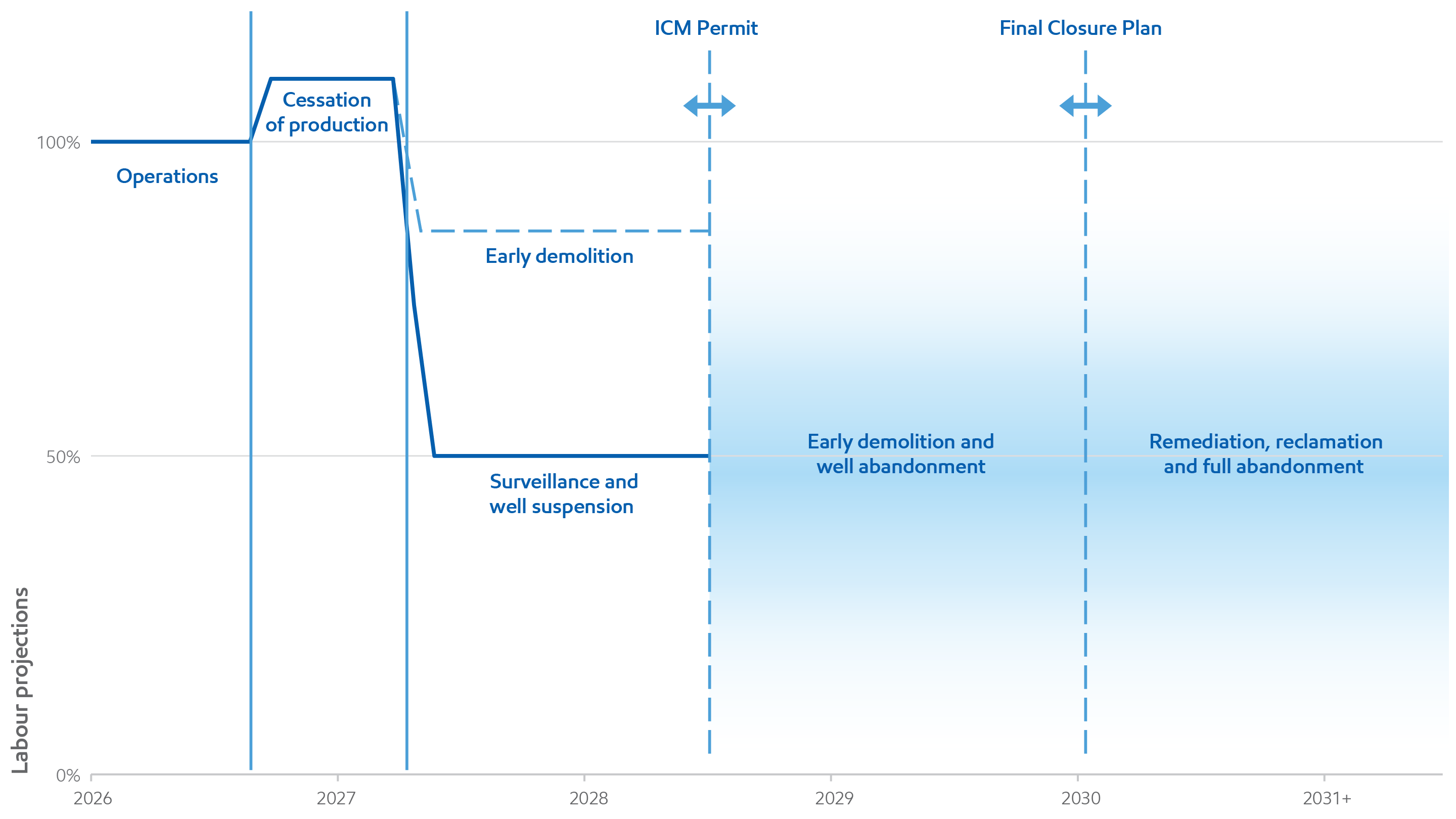
Imperial is currently undertaking a detailed assessment of workforce needs as it approaches the planned cessation of production in Q3 2026. The chart below demonstrates site activity levels are expected to increase during shut down activities. This work is planned to be done by Imperial’s existing employees and contractors currently on site to support safe and responsible end-of-production activities. Imperial remains committed to clear communication, thoughtful planning, and supporting its workforce and communities with care and respect.
As of January 2026, the workforce at Norman Wells represents:
- Approximately 60 employees and 70 contractors support operations
- Around 70 personnel are on site daily
- 26 local participants, including 10 northern residents and 16 Sahtú beneficiaries
- Employment at Imperial’s Norman Wells Operations comprised ~30% Sahtú beneficiaries in January 2026
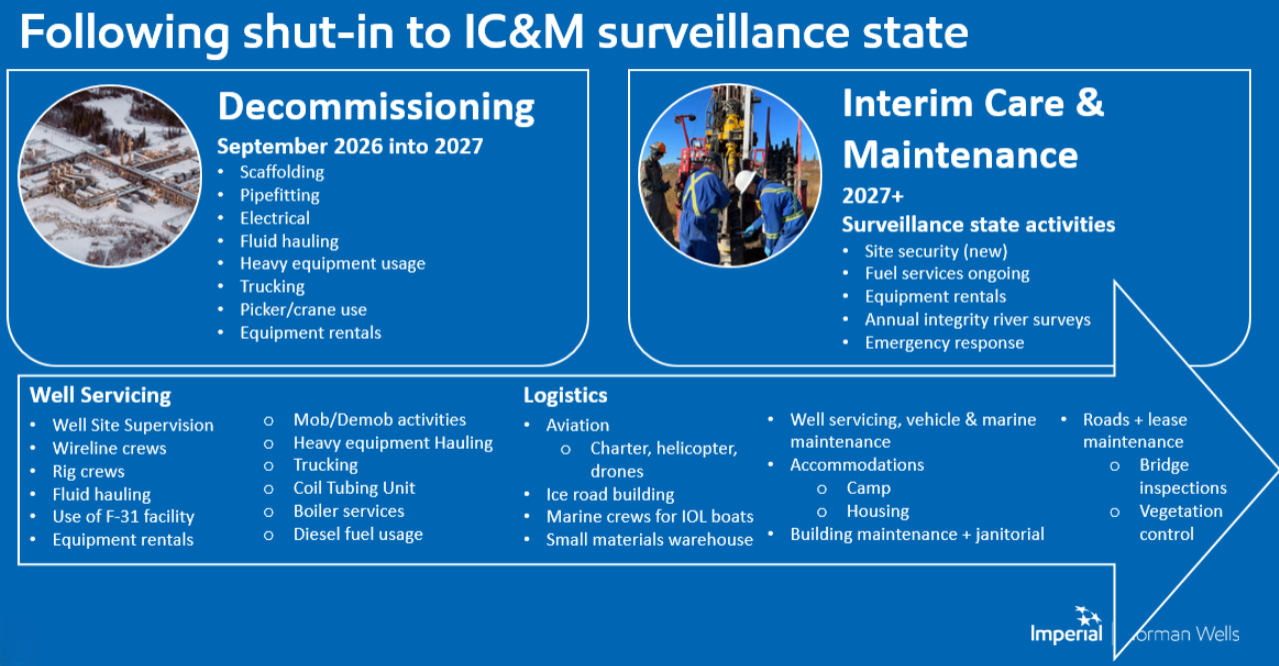
Following end of production, the majority of work going forward will be contractor led. Decommissioning work will take place under existing work permits and contracts. Following the transition to interim care and maintenance (IC&M), the contractor workforce is expected to be focused on well abandonment/servicing and general site surveillance, maintenance and logistics, with activity levels dependent on the scope of the IC&M permitting.
Activity outlook for full abandonment, remediation and reclamation anticipated to commence in the 2030s will depend on the outcome of the approved closure plan, currently undergoing MVEIRB Environmental Assessment process (5-7+ years timeline anticipated). Imperial will continue to share information as it becomes available.
IC&M surveillance timeline could range from 3 to more than 5 more years and activity scope is contingent on a number of factors, including:
- IC&M permit approval
- Advancing early well abandonment and demolition work opportunities to IC&M phase
- Approval and outcome of final closure plan
Significant remediation work will not occur until after the Closure Environmental Assessment is complete and the final closure plan is approved and permitted, which is not until the 2030s, based on current information and engagement plans. Abandonment, reclamation and remediation activities will also be on a seasonal work schedule.
Norman Wells closure
The closure project is a decades-long, community-involved process that prioritizes safety, environmental care, and Northern and Indigenous benefits.